Lesson 11. Problem Solving and Decision Making: Where Everything Comes Together
Problem Solving & Decision Making: Integrating All Competencies
Welcome to a lesson focused on developing PSDM in a command context. Here, you will learn how to apply structured decision-making models and integrate all CBTA competencies to manage complex, real-world scenarios. This is where knowledge, flight path management, workload management, situational awareness, leadership, and communication come together to support safe and effective outcomes.
PSDM represents the pinnacle of your development. It is where all competencies combine—enabling you, as a Captain, to assess, decide, and act with clarity and confidence.
- Learn and practice using models like FORDEC, RMATE and ANCAAM, for safe, timely decisions.
- Combine knowledge, flight path management, application of procedures, workload management, situational awareness, communication and leadership and teamwork in realistic situations.
- Use feedback and self-assessment to refine your decision-making skills.
- Develop habits and strategies to excel in assessments and real-world operations.
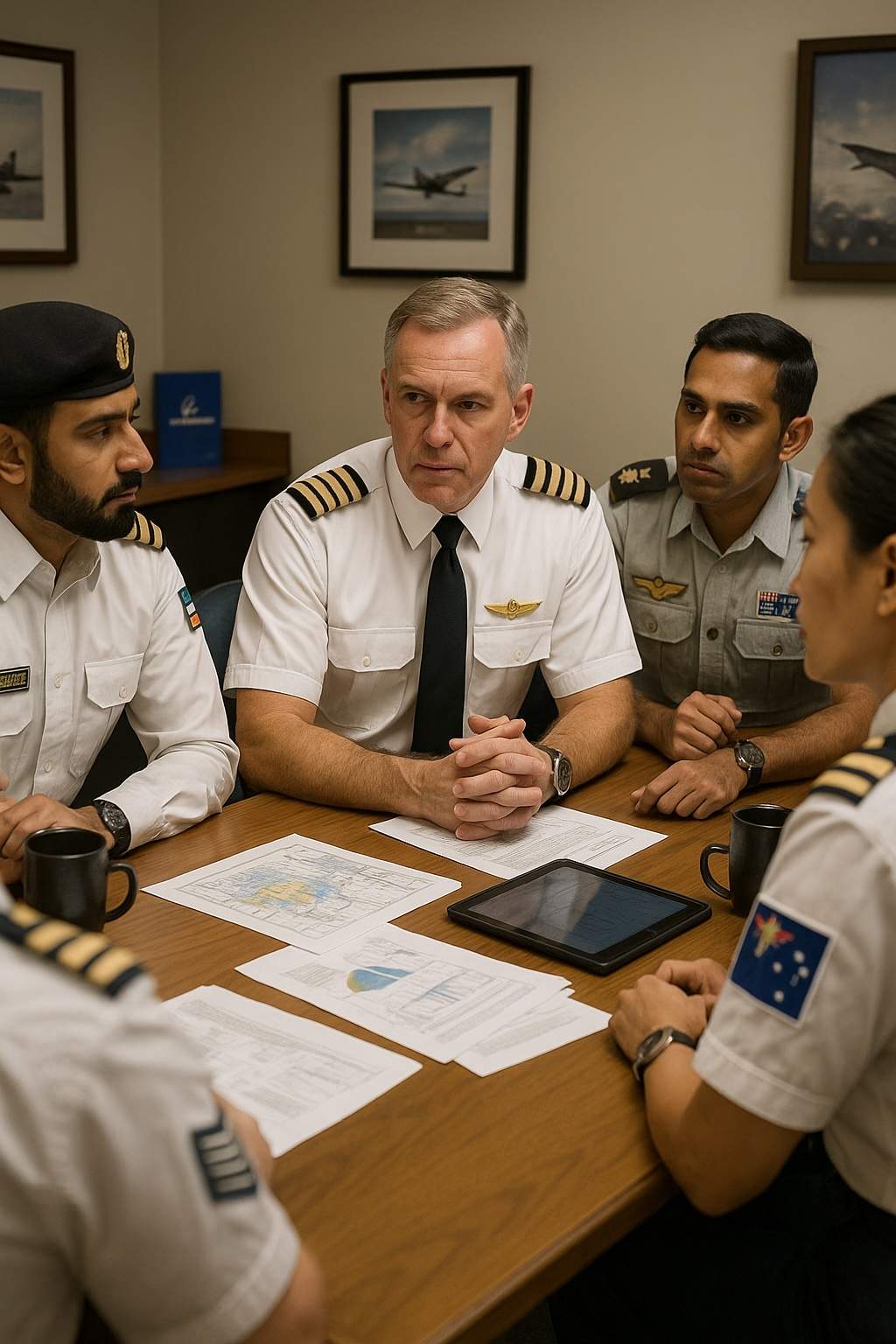 Decision making can be a complex, team focused process.
Structured Decision-Making Models: The Core of Command
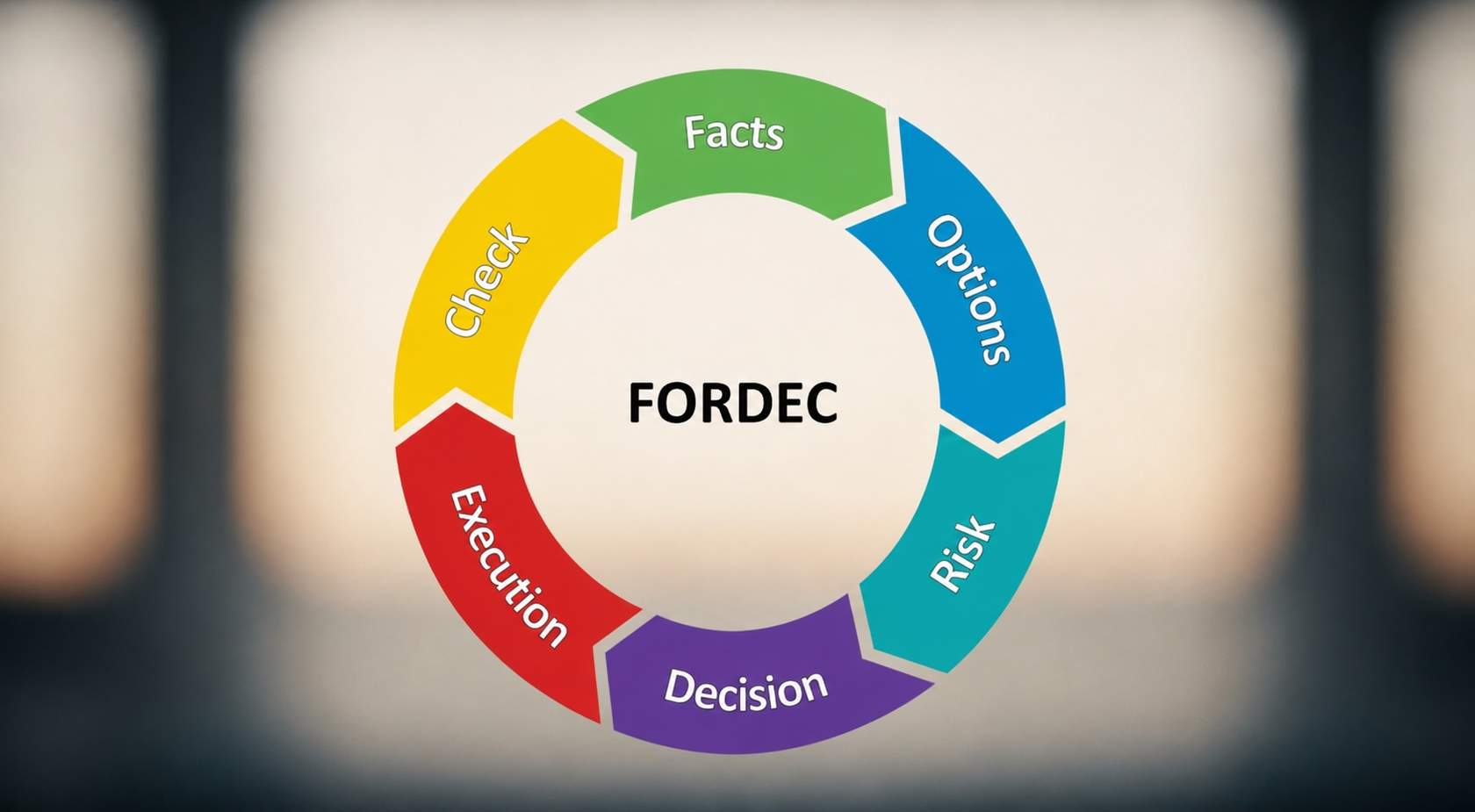
FORDEC stands for Facts, Options, Risks, Decision, Execution, Check. This model guides crews through a logical sequence: gather facts, generate options, assess risks, make a decision, execute the plan, and check the outcome. It is especially useful for complex or ambiguous situations where collaboration is needed.
The model was developed (or at least formalised) through work by Lufthansa and the German Aerospace Center (DLR) around the early-1990s as part of CRM/aircrew decision-making frameworks.
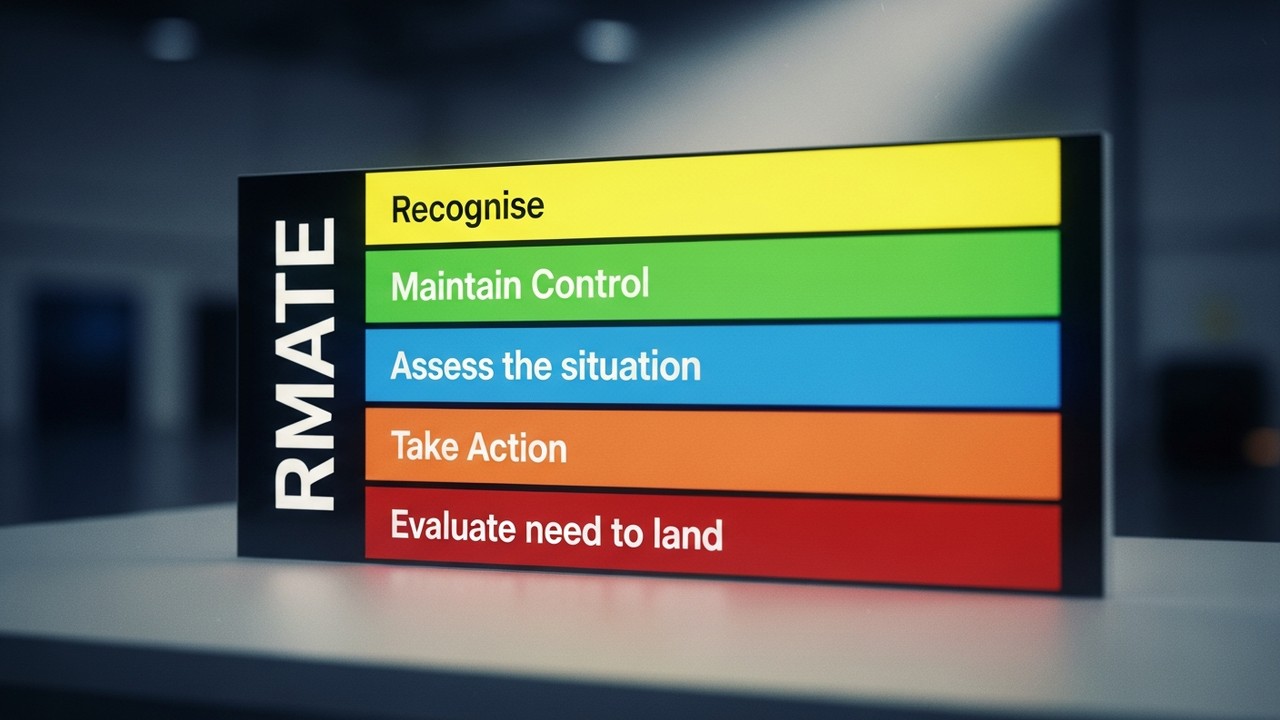
RMATE stands for Recognise the situation, Maintain control of the aircraft, Assess the problem, Take appropriate action, Evaluate the need to land. This model emphasises continuous monitoring and adaptation, encouraging crews to reassess and adjust as situations evolve.
It is well-suited for ongoing, dynamic scenarios where evolving threats or system degradations require a flexible and cyclic approach rather than a single linear decision point.
Although not formally attributed to a specific manufacturer, RMATE is commonly found in Boeing training materials and airline CRM syllabi aligned with Boeing operations. Its origin appears to be industry-derived rather than proprietary, possibly evolving from practical flight operations and line-training environments rather than academic or regulatory frameworks. As such, it has become a practical, operator-level decision aid rather than a formally standardised model like FORDEC.
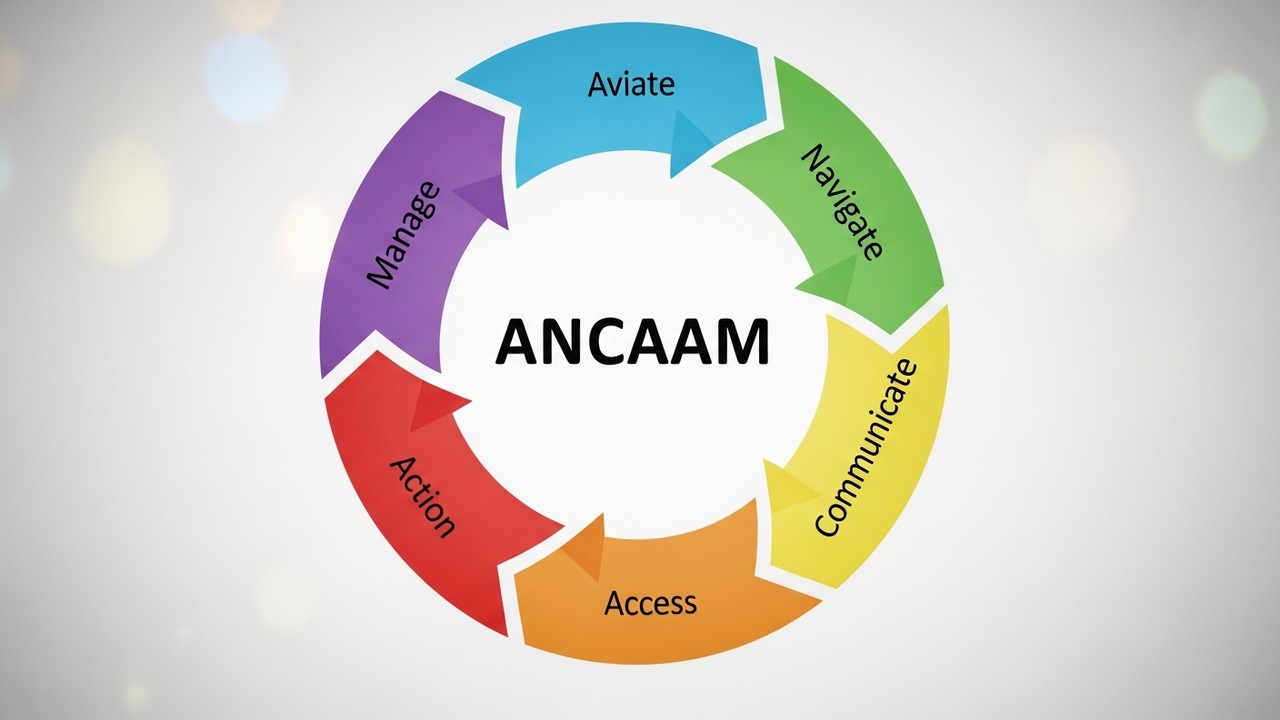
ANCAAM stands for Aviate, Navigate, Communicate, Assess, Action, Manage. This sequential model is well-suited to time-critical events, ensuring flying the aircraft remains the top priority before moving through structured assessment and action steps.
It helps maintain order and focus under pressure, especially during high workload or emergency scenarios.
ANCAAM builds on the traditional “Aviate–Navigate–Communicate” mantra and appears to be an instructional extension developed within training and CRM environments. While not formally standardised by ICAO or regulators, it is increasingly used in threat-and-error management and CBTA-aligned syllabi as a practical decision-making aid.
Choosing the Right Model
In command, decisions must be timely, clear, and confidently delivered. Understanding your own decision-making tendencies allows you to apply a model that feels natural and effective—supporting structured thinking rather than slowing it down.
This alignment is critical. A model that fits your thought process enables you to assess situations more clearly, communicate intent effectively, and guide the crew with confidence when it matters most.
Use RMATE to stay ahead of changing conditions and adapt as needed.
Expanding on ANCAAM
The goal is not to memorise multiple complex models, but to use one that fits naturally with your thinking—helping you maintain clarity, structure, and confidence as you build experience in the Captain’s role.
For these reasons, let’s take a closer look at the individual elements of the ANCAAM model.
This model has been selected for further focus because it is practical, intuitive, and easy to remember, particularly in high-workload situations. It aligns closely with the core aviation priority of Aviate, Navigate, Communicate, reinforcing the need to maintain aircraft control while managing the situation.
To enhance its effectiveness in a command context, two additional steps have been incorporated (adapted from the RMATE model):
- Recognise the Situation (initial step)
- Decide / Evaluate the need to land (after ACTION and before MANAGE)
Explore the sections below to develop a deeper understanding of how ANCAAM can support your decision-making in command.
Given the situation, should you stay on track, turn off track, go into a hold, or commence an immediate turn back towards your departure airport or towards a diversion airport?
At the very least, this a great time for a mini brief with your co-pilot about your immediate plans ("let's action this checklist once we're through 10,000ft")
The majority of the time, your EICAS/ECAM will provide you with answers, but complex or confusing scenarios may require deeper consideration to ensure the correct checklists are actioned.
Wherever possible, complete all non-normal checklist before moving to the next phase (decision), as the completed checklists are likely to be helpful for the decision making process.
This may be an obvious decision; the checklist says "land at the nearest suitable airport, and that choice is obvious, and can be made by the crew themselves. Or, it might be less urgent, and require collaboration with company operations to decide the best operational option.
In either case, you'll need to further consider three aspects in your diversion decision.
Can you get there? (Fuel, aircraft technical state)
Can you land when you get there? (Weather, Approach aids, performance)
What happens after you land? (tech turn around support, passenger support)
Weather
Weight (aligned with performance)
Purser
Passengers
Company
We'll expand on this in the next section.
Expanding on the "Manage" Phase.
Review the following sections to understand more about this handy aide memoire.
Understanding the ANCAAM Model
Developing Command Decision Confidence
This tendency can be even more pronounced in strongly hierarchical cultures, where deference to authority is ingrained. In such environments, new Captains may hesitate to make independent decisions, even when they are fully empowered—and expected—to do so.
While the company is an important support partner, it does not replace command responsibility. Over-reliance on external input can delay decision-making and reduce clarity in time-critical situations.
Developing confidence in command means recognising when to seek input—and when to decide. It requires trusting your training, applying structured decision-making models, and accepting accountability for the outcome.
This is a skill that develops with experience, but it must be approached deliberately. Effective Captains use company resources to support their decisions—not to make them.
The Captain and the Company: A Command Partnership.
Company as a Support Partner
When to Consult the Company
Captain's Independent Authority
When to involve the company.

When NOT to wait for the Company
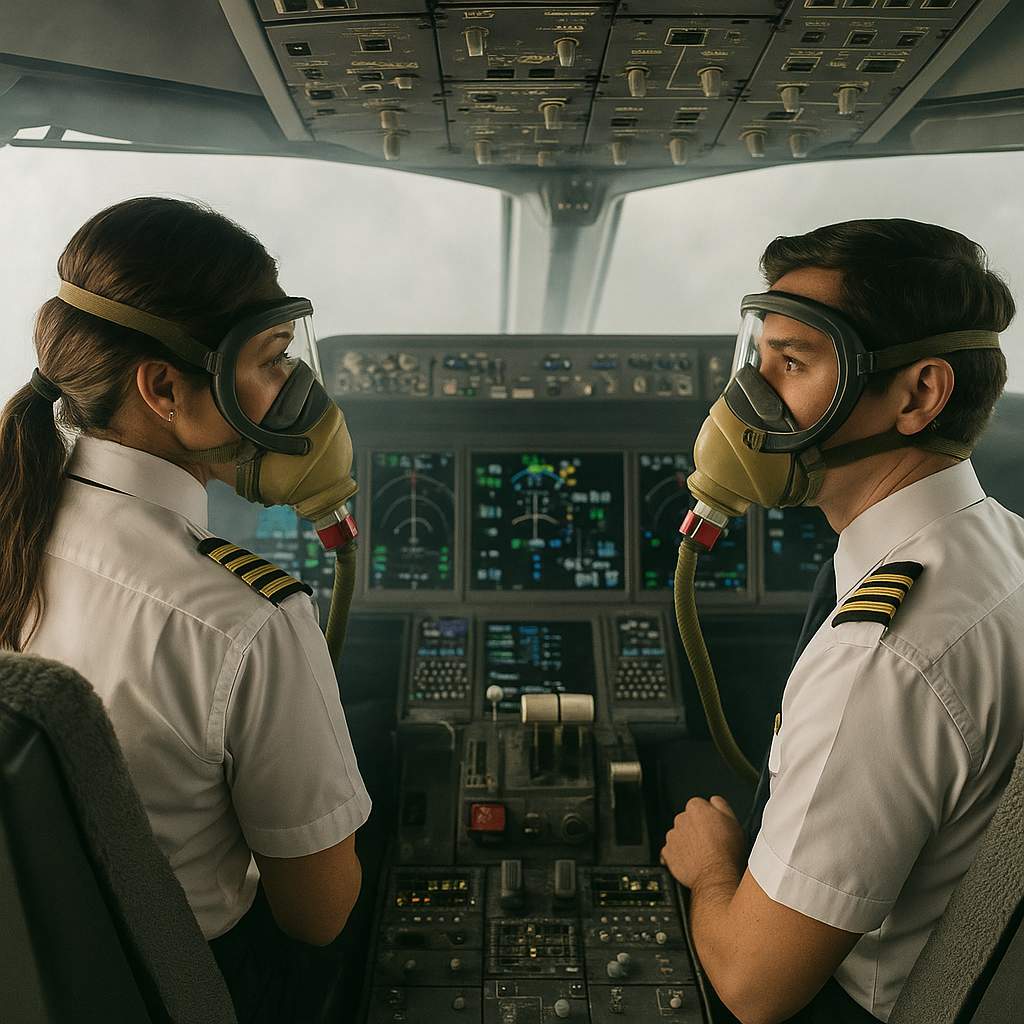
The Company as a Decision Partner
| Situation Type | Role of the Captain | Role of the Company |
|---|---|---|
| Emergency/Time-Critical | Lead decisively, act without delay. | Notify after safety is ensured. |
| Operational Delay/Option | Consult when time permits. | Offer information, not commands. |
| Non-Urgent Tech/Dispatch | Make informed decisions, escalate if unsure. | Provide guidance based on policy/SOP. |
Integrating CBTA Competencies in Real-Time
Each CBTA competency plays a vital role in the decision-making process. Expand each item to see how these skills support safe, effective choices in the cockpit.
Procedures guide actions and help ensure compliance and safety.
Effective workload management is critical during high-stress events.
Clear communication prevents misunderstandings and supports coordinated action.
It helps crews stay ahead of the operation and respond proactively.
Decision-Making in Action: Scenarios
Explore the balance between compliance and operational flexibility.
Continuous Improvement and Feedback
Make debriefing a routine part of your learning process.
Be open to constructive criticism and use it to refine your approach.
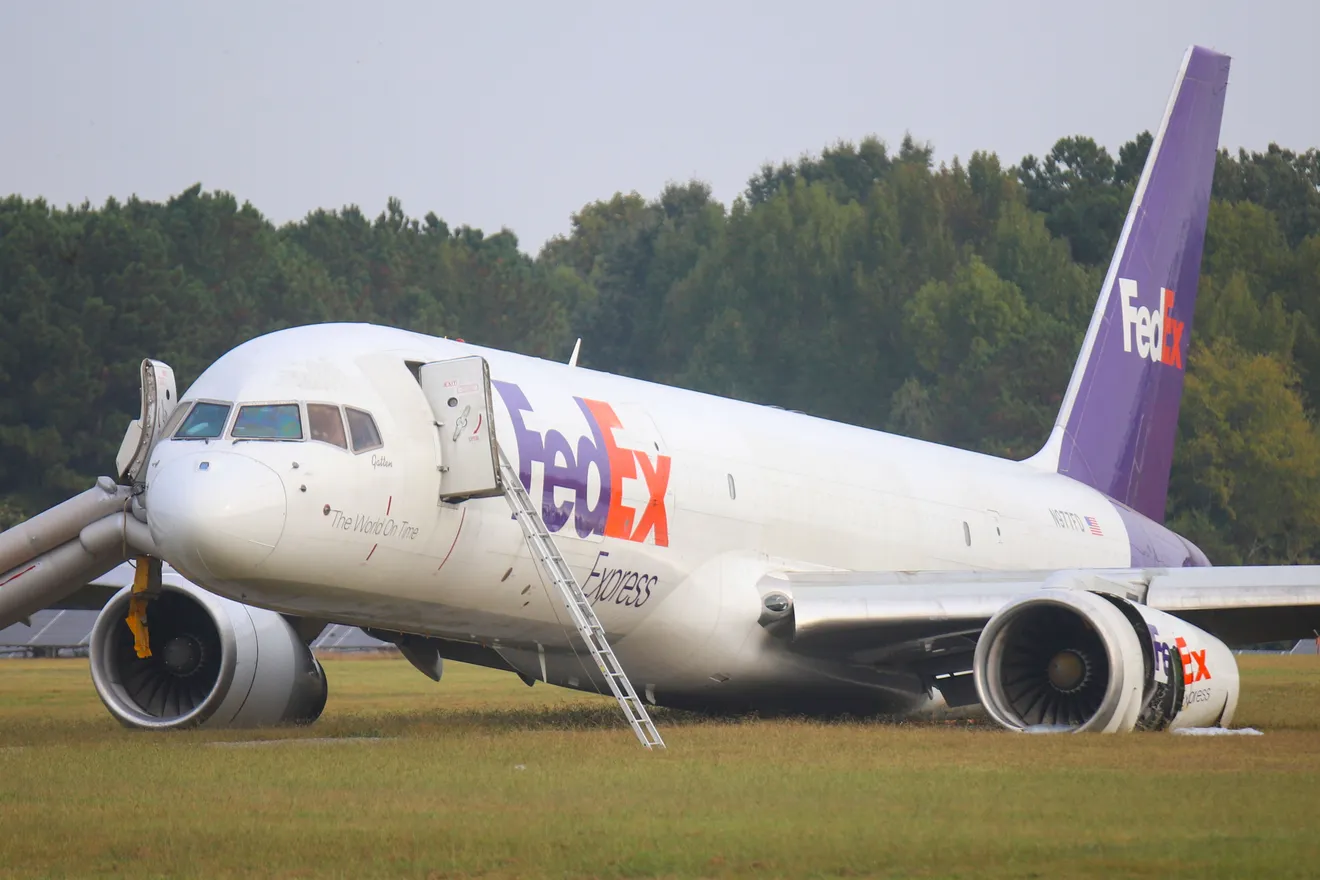
Case Study: FedEx Flight 1376
Aircraft Involved. B757-200 Freighter.
Crew Response. Crew eventually conducted a gear up landing following a complex problem solving process.
Outcome. Despite skidding off the runway, there were no injuries.
Key Lesson. FedEx 1376 shows how structured decision-making and calm execution across all CBTA competencies can turn a high-risk dual system failure into a safe landing. It’s a clear example of how competency training translates directly to operational safety.
Reviewing the Key Competencies Bought Together:
Problem Solving and Decision Making
- Interpreted a complex dual failure
- Assessed QRH options and alternate procedures
- Made timely decisions: where to land, how to land
- Showed structured reasoning under pressure
- Controlled approach and descent despite degraded systems
- Performed accurate gear-up touchdown
- Despite leaving the paved surface, the crew kept the aircraft upright.
- QRH for HYD L loss, ALT GEAR EXTENSION failure
- Escalated to engineering and dispatch
- Configured aircraft per gear-up landing checklist
- Tracked aircraft systems status and risks
- Managed energy state and descent profile
- Maintained mental model of degraded aircraft
- Clear delegation of roles
- Prioritized actions during high-stress phases
- Avoided overload by managing pace and flow
- Strong CRM and mutual support in cockpit
- Captain led decisively but included FO input
- Briefings and tasks shared effectively
- Maintained clear comms with ATC and dispatch
- Used assertive but calm radio calls
- Coordinated emergency services and evacuation preparation
- Applied deep understanding of 757 systems
- Recognized interdependencies (hydraulics, gear, steering)
- Used QRH and FCOM appropriately
✔ PSDM at the center of crew performance
✔ Integrated use of all 9 CBTA competencies
✔ Textbook example of professional crew behavior under pressure

Key Tips: Problem Solving & Decision Making
Check Your Understanding: Decision-Making Mastery
Summary and Looking Ahead
In the next lesson, you’ll build on these skills by focusing on threat and error management to complement the nine competencies you've studied so far.